
In today’s competitive and fast-changing world, education is often measured by degrees, certificates, and prestigious institutions. Society places immense value on formal qualifications, assuming that a degree automatically guarantees intelligence, competence, and success. However, real-world experience increasingly proves otherwise. While degrees may open doors, it is basic education skills—such as reading, writing, critical thinking, problem-solving, and communication—that truly determine a person’s ability to survive, adapt, and succeed in life. In many cases, these foundational skills matter far more than holding an advanced degree.
Understanding Basic Education Skills
Basic education skills refer to the essential abilities that individuals develop during primary and secondary education. These include literacy, numeracy, logical reasoning, communication, emotional intelligence, and the capacity to learn independently. These skills form the foundation upon which all advanced knowledge is built.
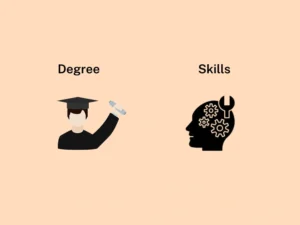 Without strong basics, higher education often becomes superficial. A person may hold a degree but struggle to express ideas clearly, analyze problems logically, or adapt to new situations. On the other hand, someone with strong foundational skills but no formal degree can often learn faster, perform better, and grow consistently.
Degrees Do Not Guarantee Practical Competence
One of the biggest misconceptions in modern society is that a degree equals competence. In reality, many graduates lack practical skills required in real-life situations. Employers across industries frequently complain that degree holders are not job-ready. They may know theory but fail to apply it effectively.
For example, a graduate with a business degree might struggle to communicate professionally, manage time, or solve real-world problems. Meanwhile, a person without a degree but with strong basic skills—such as clear communication, analytical thinking, and adaptability—may outperform them in the workplace.
This gap exists because degrees often focus on curriculum completion rather than skill mastery. Basic education skills, however, are timeless and universally applicable.
Basic Skills Enable Lifelong Learning
The modern world is changing rapidly due to technology, automation, and globalization. Jobs that exist today may disappear tomorrow, and new roles will continue to emerge. In such an environment, the ability to learn, unlearn, and relearn is more valuable than any fixed qualification.
Strong basic education skills enable lifelong learning. A person who can read effectively, think critically, ask the right questions, and learn independently can adapt to any industry or profession. Degrees may become outdated, but foundational skills remain relevant throughout life.
For instance, many successful professionals have switched careers multiple times—not because of their degrees, but because of their ability to learn new skills quickly.
Communication Skills Matter More Than Credentials
Communication is one of the most powerful basic education skills. The ability to express ideas clearly, listen actively, and interact confidently plays a crucial role in personal and professional success. Unfortunately, many degree holders struggle with basic communication, especially in real-world environments.
Whether it is negotiating a deal, leading a team, explaining an idea, or building relationships, communication skills often outweigh academic qualifications. Employers value individuals who can articulate thoughts, collaborate effectively, and represent organizations confidently.
In leadership roles especially, communication skills matter far more than academic degrees. History is full of leaders, entrepreneurs, and innovators who were not highly qualified on paper but excelled due to strong communication and thinking skills.
Problem-Solving and Critical Thinking Drive Success
Degrees often teach what to think, but basic education skills teach how to think. Critical thinking and problem-solving are essential for decision-making, innovation, and growth. These skills allow individuals to analyze situations, evaluate options, and make informed choices.
In real life, problems rarely come with clear instructions or predefined answers. People with strong critical thinking skills can handle uncertainty better than those who rely solely on textbook knowledge.
This is why many employers prioritize aptitude tests, case studies, and practical assessments over academic marks. They understand that problem-solving ability directly impacts performance and productivity.
Entrepreneurship and Self-Employment Rely on Basics
Entrepreneurs and self-employed individuals rarely succeed because of degrees alone. Running a business requires basic skills such as financial literacy, communication, decision-making, and adaptability. Many successful entrepreneurs never completed higher education, yet they built thriving businesses by mastering core skills.
Basic education skills empower individuals to create opportunities instead of waiting for them. In an era where freelancing, online businesses, and startups are growing rapidly, these skills are more valuable than ever.
A degree may help in structured employment, but foundational skills help people survive and grow independently.
Emotional Intelligence and Social Skills Are Often Ignored
Another critical area of basic education is emotional intelligence—understanding emotions, managing stress, and building healthy relationships. Degrees rarely teach these skills, yet they play a major role in success and happiness.
People with high emotional intelligence handle pressure better, work well in teams, resolve conflicts effectively, and maintain long-term professional relationships. These qualities often determine career growth more than academic achievements.
In contrast, individuals with degrees but poor emotional skills may struggle with teamwork, leadership, and workplace challenges.
Degrees Should Complement, Not Replace, Basic Skills
This does not mean that degrees are useless. Formal education still plays an important role in specialized fields such as medicine, engineering, law, and research. However, degrees should complement strong basic education skills, not replace them.
When foundational skills are weak, degrees lose their value. But when basic skills are strong, even a simple qualification can lead to exceptional outcomes.
The focus of education systems should shift from rote learning and degree obsession to skill development, practical understanding, and real-world application.
Conclusion
In the end, success is not determined by the degree written on a certificate but by the skills a person applies in daily life. Basic education skills—such as literacy, communication, critical thinking, problem-solving, adaptability, and emotional intelligence—form the true backbone of personal and professional growth.
Degrees may open the first door, but basic skills decide how far one can go. In a rapidly changing world, it is these foundational abilities that empower individuals to learn continuously, adapt confidently, and succeed sustainably.