
Remember that feeling? That crisp, new planner with all its pristine pages? Or that revolutionary app you downloaded, promising to streamline your life? You’re buzzing with motivation, ready to conquer mountains of tasks. Then, a week later, it’s all gathering dust.
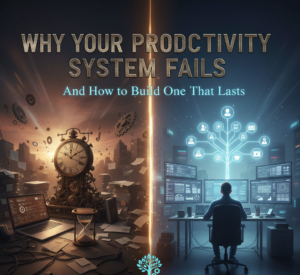 The motivation wanes, distractions creep in, and you find yourself back in the familiar mire of procrastination. It’s a cycle many of us have been through, myself included. We buy into the latest productivity hack, the shiny new tool, or the aggressive “hustle harder” mantra, only to crash and burn. But what if the problem isn’t the tools, but the game we’re playing – the inner game?
The Illusion of External Solutions
For years, I chased external fixes. More sophisticated to-do lists, time-blocking techniques that felt like rigid cages, even expensive productivity courses. Each time, I’d experience a brief surge of hope, a temporary uptick in output. But inevitably, the cracks would appear. A stressful project, a personal setback, or just the sheer monotony of routine would send me spiraling. It was like trying to build a skyscraper on quicksand. The foundation – my own internal operating system – was unstable.
This is where most people get stuck. We focus on the ‘what’ and the ‘how’ – what tasks to do, how to schedule them – neglecting the ‘why’ and the ‘who’. Why are we struggling? Who are we trying to be? Without addressing the underlying psychological drivers and our own self-perception, any external system is bound to fail. We are not robots designed for optimal task completion. We are complex human beings with emotions, energy fluctuations, and deeply ingrained patterns of behavior.
Deconstructing the Productivity Breakdown
Why does our carefully constructed productivity plan often crumble? It’s rarely a single culprit. It’s usually a perfect storm of factors:
1. The Motivation Mirage
We wait for motivation to strike, like waiting for a bus that may never come. The truth is, motivation is fickle. It’s a feeling, an emotion, and emotions are temporary. Relying on motivation to get things done is a recipe for inconsistency. What looks productive on the surface is often just a flurry of activity driven by a temporary emotional high, rather than a sustainable commitment.
2. The Tyranny of Urgency
Our days are often dictated by what’s urgent, not what’s important. The urgent tasks, those with immediate deadlines or loud demands, scream for our attention. The important tasks, the ones that contribute to our long-term goals and personal growth, often sit neglected. This is a classic symptom of a reactive rather than proactive approach to productivity. We’re constantly putting out fires instead of building a fireproof structure.
3. The Energy Drainers
We push ourselves relentlessly, ignoring our body’s signals for rest. We mistake exhaustion for dedication. Burnout isn’t a badge of honor; it’s a sign that our current approach is unsustainable. Pushing past our limits doesn’t lead to peak performance; it leads to errors, decreased creativity, and a general feeling of being depleted. This is a critical point: true productivity is fueled by energy, not just willpower.
4. The Overthinking Trap
We spend more time planning to plan than actually doing. We research the “perfect” system, analyze every potential pitfall, and create elaborate frameworks that never see the light of day. This overthinking is often a form of procrastination in disguise. It feels productive because we’re engaged in activity, but it paralyzes us from taking meaningful action. It’s like a car with a full tank of gas but the parking brake still on.
5. The Distraction Deluge
In our hyper-connected world, distractions are everywhere. Notifications ping, social media feeds beckon, and the endless scroll is a siren song. Our brains are not wired for sustained, deep focus in such an environment. Constant task-switching fragments our attention, making deep work almost impossible. What feels like a quick glance at your phone can derail hours of cognitive flow.
Building a Resilient Productivity System: The Inner Game Approach
So, how do we move beyond the cycle of enthusiasm and disappointment? It starts with shifting our focus inward. We need to build a system that’s not just about managing tasks, but about managing ourselves. This means cultivating a resilient inner game.
1. Embrace Intentionality Over Motivation
Instead of waiting for motivation, cultivate intention. Intention is a conscious decision, a commitment to a goal. It’s about showing up even when you don’t feel like it. This is where the concept of habits becomes crucial. Habits are the bridge between intention and action. They automate behavior, reducing reliance on fleeting emotions. Start small. Pick one thing you want to do consistently and build a tiny habit around it. The goal isn’t perfection; it’s repetition. This is the bedrock of long-term growth, a principle that applies across all learning, whether it’s formal or informal. [cite: internal link 1]
2. Prioritize Deep Work and Value Alignment
Differentiate between urgent and important. Ask yourself: “Does this task move me closer to my long-term goals?” If the answer is no, it’s likely a distraction. Learn to say no to things that don’t align with your priorities. This might feel uncomfortable at first, especially in a work environment that constantly pushes for more. However, protecting your time for deep work – those periods of focused, uninterrupted effort on cognitively demanding tasks – is non-negotiable for meaningful progress.
3. Champion Energy Management, Not Just Time Management
Recognize that your energy levels fluctuate. Instead of rigidly scheduling every minute, schedule based on your energy. Do demanding tasks when you’re most alert and creative. Schedule less intensive work for lower energy periods. Crucially, build in intentional rest and recovery. This isn’t laziness; it’s strategic replenishment. Think of it like athletes who prioritize rest days – they understand that recovery is as vital as training for peak performance. Sustainable productivity is about managing your energy reserves wisely.
4. Develop a Bias for Action (Even Imperfect Action)
Combat overthinking with deliberate action. Give yourself permission to be imperfect. The goal of your first draft, your first attempt, your first system, is simply to *start*. You can refine and iterate later. Set a timer for 15 minutes and just work on the task. Often, getting started is the hardest part. Once you’re in motion, momentum builds. This pragmatic approach cuts through the paralysis of perfectionism.
5. Architect Your Environment for Focus
You can’t always control external distractions, but you can control your response and your environment. Turn off notifications. Designate specific times for checking email or social media. Create a physical space that signals “focus time.” Sometimes, it’s as simple as putting your phone in another room or using website blockers. Think of it as building a fortress for your attention. In the fast-paced professional landscape of 2025–2026, where hybrid work models and constant connectivity are the norm, mastering your attention is a superpower.
The Long-Term Payoff: Beyond Just Getting More Done
This shift from external hacks to internal mastery has profound implications. It’s not just about ticking off more items on your to-do list. It’s about cultivating:
- Increased Confidence: Every time you follow through on an intention, even imperfectly, you build self-trust. This snowball effect is incredibly powerful.
- Greater Clarity: By focusing on what truly matters, you gain a clearer understanding of your goals and your life’s direction.
- Sustainable Growth: You build a capacity for learning and achievement that doesn’t rely on burnout. This is crucial for adapting to the ever-changing demands of work and life.
- Enhanced Well-being: Reduced stress, better energy management, and a sense of accomplishment contribute to overall happiness and fulfillment.
- Career Advancement: Consistently delivering high-quality work, making strategic decisions, and demonstrating reliability naturally propels your career forward.
- Financial Improvement: Increased productivity and strategic focus often translate directly into better income potential and more opportunities.
The modern work environment, with its constant digital barrage and the pressure to always be “on,” makes this inner work more critical than ever. The future of sustainable growth isn’t about doing more; it’s about doing what matters, with focused energy and unwavering intention. It’s about becoming the master of your own mind, rather than a slave to distractions.
Busting Productivity Myths
Let’s address some common myths that often sabotage our efforts:
Myth 1: Multitasking is Efficient
Reality: Multitasking is actually “rapid task-switching.” It drastically reduces cognitive efficiency, increases errors, and takes longer overall than single-tasking. Our brains are not designed to do multiple complex things simultaneously.
Myth 2: You Need to Be Motivated to Start
Reality: Motivation often *follows* action, not the other way around. The act of starting, of engaging with a task, generates momentum and can spark motivation. Focus on building habits and routines that don’t depend on how you feel.
Myth 3: Hustle Culture is the Only Way to Succeed
Reality: While hard work is essential, relentless, unsustainable hustle leads to burnout, not long-term success. Strategic, focused effort combined with adequate rest and recovery is far more effective and healthier.
Myth 4: Productivity is About Doing More Things
Reality: True productivity is about achieving meaningful results. It’s about doing the *right* things, not just doing more things. This often means saying no to many tasks to focus on a few high-impact ones.
FAQs: Your Productivity Questions Answered
Q1: How do I overcome procrastination when I have zero motivation?
A1: Shift your focus from motivation to intention. Commit to starting for just 5-10 minutes. Often, the momentum from starting is enough to keep you going. Lower the barrier to entry; make the first step as easy as possible. Remember the difference between formal and informal education – learning and doing can happen in small, consistent steps outside of a structured curriculum. [cite: internal link 1]
Q2: My phone is my biggest distraction. What can I do?
A2: Be deliberate about your phone usage. Turn off non-essential notifications. Schedule specific times to check social media and emails, rather than letting them interrupt you constantly. Consider using app blockers or keeping your phone in a different room during deep work sessions. Architect your environment to minimize temptation.
Q3: I feel overwhelmed by my to-do list. How can I manage it?
A3: Break down large tasks into smaller, actionable steps. Prioritize ruthlessly using a system like the Eisenhower Matrix (urgent/important). Focus on just 1-3 key tasks per day that will make the biggest impact. It’s better to complete a few crucial items than to touch many and finish none.
Q4: How much sleep do I really need for peak productivity?
A4: While individual needs vary, most adults need 7-9 hours of quality sleep. Sleep is not a luxury; it’s a fundamental requirement for cognitive function, focus, and energy. Prioritizing sleep is a powerful productivity strategy.
Q5: I try new systems but keep falling back into old habits. What am I doing wrong?
A5: You might be trying to change too much too soon, or relying too heavily on external systems without building internal resilience. Focus on building ONE small habit at a time. Celebrate small wins. Understand that consistency is built over time, through repetition, not through one-off perfect efforts. This journey is about continuous improvement, not instant perfection.
Q6: How do I balance deep work with unexpected urgent tasks?
A6: This requires flexibility and clear boundaries. Protect your deep work blocks as much as possible. When urgent tasks arise, assess their true importance. Can it wait until after your deep work session? If not, address it, then consciously return to your deep work. It’s about managing interruptions, not eliminating them entirely. This skill is honed over time, much like developing any expertise.
Q7: What’s the biggest mistake people make when trying to be more productive?
A7: The biggest mistake is chasing external “hacks” or tools without addressing their internal operating system – their mindset, habits, and energy management. Focusing on systems without understanding the psychology behind them is like trying to fix a car engine without knowing anything about mechanics.
Q8: How can I maintain productivity long-term without burning out?
A8: Prioritize sustainable practices: energy management, strategic rest, realistic goals, and focusing on what truly matters. Build a system that works *with* your human nature, not against it. This means regular reflection, adaptation, and self-compassion. It’s a marathon, not a sprint. Visit Leadinglearn for more insights on building sustainable growth.