
History, they say, is written by the victors. But what about the stories of those who came before? The forgotten empires, the innovative societies, the people who laid the groundwork for our modern world? Let’s embark on a journey through time, exploring the captivating world of ancient civilizations. This isn’t just about dates and dynasties; it’s about understanding the human spirit, the ingenuity of our ancestors, and the enduring legacy they left behind.
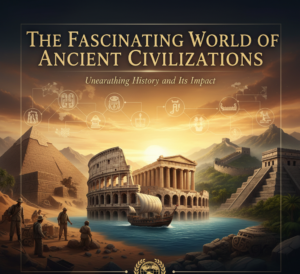 Why Study Ancient Civilizations? More Than Just Old History
Why should we bother with civilizations that existed thousands of years ago? Because their stories are far from dusty relics; they’re vibrant tapestries woven with threads of innovation, conflict, and cultural exchange. Studying ancient civilizations provides valuable context for understanding our present. It allows us to:
- Understand the Roots of Our Society: Many aspects of modern life, from governance and law to art and architecture, have roots in ancient civilizations.
- Learn from Past Mistakes: Examining the rise and fall of empires offers insights into the consequences of war, political corruption, and environmental degradation. This knowledge can help us avoid repeating the errors of the past.
- Appreciate Human Ingenuity: The achievements of ancient civilizations, from the pyramids of Egypt to the aqueducts of Rome, showcase the remarkable capacity of humans to solve problems and create lasting legacies.
- Foster a Global Perspective: Exploring diverse cultures broadens our understanding of the world and promotes empathy for people from different backgrounds.
- Recognize the Cycles of History: The rise and fall of civilizations often follow patterns. Recognizing these patterns can help us understand current events and anticipate future trends.
Key Ancient Civilizations: A Glimpse into the Past
The world is filled with remarkable ancient civilizations, each with its unique characteristics and contributions. Here are a few examples to get us started:
Mesopotamia: The Cradle of Civilization
Nestled between the Tigris and Euphrates rivers, Mesopotamia (modern-day Iraq) is often called the “cradle of civilization.” It was here, around 3500 BC, that some of the earliest cities and states emerged. The Sumerians, Babylonians, and Assyrians all flourished in this fertile region.
Key Achievements:
- Writing: The Sumerians developed cuneiform, one of the earliest known writing systems.
- Agriculture: Irrigation techniques allowed for advanced farming and surplus food production.
- Law: The Code of Hammurabi, a Babylonian legal code, established principles of justice and governance.
- Architecture: The construction of ziggurats, massive stepped pyramids, demonstrated advanced engineering skills.
India Connection: The Indus Valley Civilization, which flourished in the Indian subcontinent around the same time, was influenced by Mesopotamian trade and cultural exchange. Evidence of Indus seals has been found in Mesopotamia, demonstrating a vibrant relationship. This underlines the interconnectedness of ancient civilizations.
Ancient Egypt: Land of the Pharaohs
The civilization of ancient Egypt, centered around the Nile River, is renowned for its iconic pyramids, pharaohs, and elaborate religious beliefs. It thrived for over 3,000 years, from around 3100 BC to 30 BC.
Key Achievements:
- Monumental Architecture: The pyramids, temples, and obelisks stand as testaments to the Egyptians’ engineering prowess.
- Writing: Hieroglyphs, a complex writing system, were used to record history, religious texts, and everyday life.
- Mathematics and Astronomy: The Egyptians developed advanced mathematical and astronomical knowledge for construction, surveying, and calendar creation.
- Medicine: They practiced sophisticated medical techniques, including surgery and the treatment of diseases.
India Connection: While geographically distant, there is evidence of trade between ancient Egypt and India, particularly in the form of spices and textiles. Some scholars believe that the concept of mummification might have influenced burial practices in certain parts of India.
Ancient Greece: Birthplace of Democracy and Philosophy
Ancient Greece, with its city-states like Athens and Sparta, made significant contributions to philosophy, democracy, literature, and art. Its influence has shaped Western civilization for centuries. The classical period flourished from roughly 800 BC to 600 AD.
Key Achievements:
- Democracy: Athens pioneered the concept of democracy, where citizens could participate in government.
- Philosophy: Philosophers like Socrates, Plato, and Aristotle laid the foundation for Western philosophical thought.
- Literature: Homer’s epics (the Iliad and the Odyssey) and the plays of Sophocles and Euripides continue to captivate readers.
- Art and Architecture: Greek sculpture, architecture (e.g., the Parthenon), and pottery are admired for their beauty and sophistication.
India Connection: Alexander the Great’s conquests brought Greek influence to the Indian subcontinent, leading to cultural exchange and the establishment of Indo-Greek kingdoms. Greek artistic styles influenced Indian art, and there was a cross-pollination of philosophical ideas.
The Roman Empire: Builders of an Empire
The Roman Empire, which rose to prominence in the Mediterranean world, was known for its military might, sophisticated infrastructure, and legal system. It lasted for centuries, leaving a lasting impact on Europe and beyond. The Roman Empire’s height was from 27 BC to 476 AD.
Key Achievements:
- Law and Governance: Roman law, with its principles of justice and citizenship, has influenced legal systems worldwide.
- Engineering and Infrastructure: Roads, aqueducts, bridges, and public buildings demonstrated Roman engineering skills.
- Military Organization: The Roman army was a highly organized and disciplined force, contributing to the empire’s expansion.
- Language and Culture: The Latin language and Roman culture spread throughout the empire, influencing European languages and traditions.
India Connection: The Roman Empire engaged in extensive trade with India, importing spices, textiles, and other goods. Roman coins and artifacts have been found in India, providing evidence of this economic interaction.
The Mayan Civilization: Masters of the Americas
The Mayan civilization, which flourished in present-day Mexico and Central America, was known for its advanced mathematics, astronomy, and calendar system. It reached its peak from approximately 250 AD to 900 AD.
Key Achievements:
- Mathematics and Astronomy: The Mayans developed a sophisticated calendar system and made accurate astronomical observations.
- Writing: They created a complex hieroglyphic writing system to record their history, beliefs, and knowledge.
- Architecture: The Mayans built impressive cities with pyramids, temples, and palaces.
- Art and Culture: Mayan art, including sculpture, painting, and pottery, showcased their artistic skills and religious beliefs.
India Connection: While geographically distant, the Mayans shared some similarities with Indian culture, such as a complex understanding of mathematics and calendars. However, there is no direct evidence of contact or cultural exchange between the two civilizations.
Misconceptions and Myths About Ancient Civilizations
Despite all the information available, there are some common misconceptions about ancient civilizations that deserve to be debunked:
- Myth: Ancient people were primitive and ignorant.Reality: Ancient civilizations were incredibly innovative and resourceful, developing sophisticated technologies and systems that were well-suited to their environments. Their achievements in architecture, engineering, mathematics, and astronomy are still admired today.
- Myth: The pyramids were built by slaves.Reality: Evidence suggests that the pyramids were built by skilled laborers who were well-fed and cared for. They were likely paid workers, not slaves.
- Myth: Ancient civilizations were isolated and didn’t interact with each other.Reality: Trade, warfare, and cultural exchange connected many ancient civilizations. Evidence of these interactions can be found in archaeological discoveries.
- Myth: Ancient civilizations were all peaceful and harmonious.Reality: War, conflict, and social inequality were common features of many ancient societies. The stories of these civilizations often involve power struggles, invasions, and social unrest.
The Enduring Legacy of the Past
The study of ancient civilizations is not merely an academic exercise. It’s a journey into the human experience, a reminder of our shared past and the enduring power of human creativity and resilience. The innovations, ideas, and accomplishments of these societies continue to shape our world today.
For example, the principles of democracy first developed in Ancient Greece still form the basis of governance in many nations, including India. Roman law influences legal systems. The concepts of mathematics and astronomy discovered in ancient civilizations still influence education and scientific advancements. The very structure of our languages has evolved from the ancient civilizations. The study of the past is crucial for understanding the present and shaping the future. What Is Learning and Why Is It Important in Everyday Life? Well, it’s pretty clear that understanding history is one of the most important things we can do.
Ancient Civilizations in the Modern World (2025–2026 Scenario)
In the present day, interest in ancient civilizations remains strong. The study of history continues to be a core subject in education, and archaeological discoveries are regularly reported in the news. The stories of ancient civilizations are a recurring theme in popular culture, from movies and television shows to video games and books. Their stories are a reminder of what the human race has achieved, and what challenges we might still face.
Here are some of the ways in which ancient civilizations continue to influence our world:
- Historical Tourism: Ancient sites such as the pyramids of Egypt, the Roman Forum, and Machu Picchu attract millions of tourists each year, supporting local economies and fostering cultural exchange.
- Scientific Research: Scientists are constantly analyzing artifacts, sites, and texts from the ancient world. They are trying to understand the past, and sometimes to draw lessons for the future.
- Cultural Preservation: Efforts are being made to protect and preserve ancient sites and artifacts from destruction, theft, and neglect. This involves funding for archaeological digs and historical research.
- Inspiration for the Arts: Ancient civilizations provide a wealth of inspiration for artists, writers, and filmmakers, inspiring new creations.
How Can Knowledge of Ancient Civilizations Help in Exams and Daily Life?
The study of ancient civilizations can be immensely valuable in both academic pursuits and everyday life:
- For Exams:
- Competitive Exams: A solid understanding of ancient history is crucial for success in competitive exams like the UPSC Civil Services Examination (in India) and other government jobs, where history forms a significant part of the syllabus.
- School and College Exams: History, archaeology, and related subjects often form the curriculum, so knowledge of ancient civilizations is essential.
- Historical Reasoning: Studying ancient civilizations develops critical thinking skills and the ability to analyze historical events.
- In Daily Life:
- Understanding Current Events: Knowing the historical context of global issues and conflicts can enhance your understanding of current events.
- Cultural Awareness: Learning about different cultures fosters empathy and appreciation for diversity.
- Enhanced Communication: Knowledge of history makes for engaging and informed conversations, enriching your interactions with others.
- Critical Thinking: Learning from history allows you to analyze situations and make informed decisions.
Frequently Asked Questions About Ancient Civilizations
Here are some common questions about ancient civilizations, answered to expand your understanding:
- What is the oldest civilization known to humankind?While it is difficult to give a definitive answer, the Mesopotamian civilization, specifically the Sumerians, is often considered one of the oldest, dating back to around 3500 BC. Their development of writing and agriculture is a cornerstone of early civilization.
- What were the main reasons for the decline of ancient civilizations?The decline of ancient civilizations was often complex, stemming from a combination of factors. These can include overpopulation, environmental degradation, economic instability, political corruption, internal conflicts, and invasions from external forces.
- How did ancient civilizations influence modern technology?Ancient civilizations paved the way for many technological advancements that we still use today. They include the development of writing, mathematics, engineering, irrigation, and advancements in the understanding of the stars.
- What are some of the most impressive architectural achievements of ancient civilizations?Some of the most impressive architectural feats include the pyramids of Egypt, the Great Wall of China, the Colosseum in Rome, the Parthenon in Athens, and the Mayan temples of Central America.
- Did ancient civilizations have contact with each other?Yes, many ancient civilizations engaged in trade, warfare, and cultural exchange with each other. Evidence of these interactions has been found through the discovery of artifacts and historical records.
- What is the significance of the Rosetta Stone?The Rosetta Stone is a crucial artifact that enabled scholars to decipher Egyptian hieroglyphs. The stone, with inscriptions in hieroglyphs, demotic script, and ancient Greek, served as the key to understanding ancient Egyptian texts.
- How did the study of ancient civilizations change over time?The study of ancient civilizations has evolved from a focus on political history and great leaders to incorporate insights from archaeology, anthropology, and other disciplines. These new viewpoints give us a fuller understanding of the lives and cultures of these civilizations.
- What role did women play in ancient civilizations?The role of women varied greatly depending on the civilization and the time period. Some societies allowed women a degree of autonomy and social mobility, while others restricted them to domestic roles. Recent scholarship seeks to uncover more about the lives of women in these civilizations.