
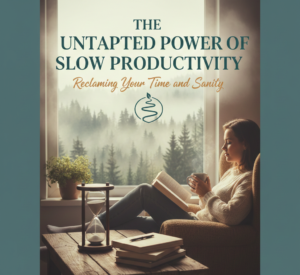
 I’ve been there. You’re drowning in a sea of to-do lists, notifications buzzing like angry bees, and that nagging feeling that you’re always behind. The “hustle harder” culture screams in your ear, promising that more hours equal more success. But, as a productivity strategist, I’ve seen firsthand how this relentless pursuit of “doing more” often leads to burnout, overwhelm, and ultimately, a decline in actual results.
This is where “slow productivity” comes in. It’s not about being lazy. It’s about being intentional. It’s about consciously choosing a pace that aligns with your values, energy levels, and long-term goals. It’s about recognizing that true productivity isn’t a race to the finish line, but a sustainable marathon of focused effort and mindful rest. Think of it like a carefully cultivated garden rather than a fast-food assembly line. You can’t force a rose to bloom overnight, but with the right care and attention, it will flourish in its own time.
The Productivity Trap: Why “More” Doesn’t Always Equal “Better”
Let’s be real. The modern world is engineered to distract you. Our phones are pocket-sized dopamine dispensers, social media algorithms are designed to keep you scrolling, and the constant pressure to “optimize” every waking moment can be paralyzing. Here’s why the traditional “hustle” model so often fails:
- Burnout is Inevitable: Pushing yourself to the limit constantly depletes your energy reserves. Eventually, you crash. And when you crash, you lose momentum and consistency.
- Diminished Returns: As you try to do more, your focus thins out. You start juggling multiple tasks, your work quality suffers, and you end up spending more time fixing mistakes than making progress.
- The Illusion of Productivity: You look busy, but are you truly moving the needle? Are you working on the right things? Or are you simply reacting to the loudest alerts and most urgent demands?
- The Mental Toll: The constant pressure creates a low-level hum of anxiety. You start to dread work, and your creativity and ability to problem-solve plummet. It’s exhausting, mentally and emotionally.
I see this all the time. People are working *hard* and they *feel* busy, yet they’re not achieving the results they desire. They’re stuck on a treadmill, running faster and faster, but never actually getting anywhere.
Slow Productivity: A Framework for Sustainable Growth
Slow productivity isn’t about doing less; it’s about doing the *right* things, in the *right* way, at the *right* pace. It’s a complete mindset shift. Here’s a practical framework:
1. Define Your “Why” – The Foundation of Intentional Action
Before you even think about your to-do list, you must understand your core values and long-term goals. What truly matters to you? What kind of life do you want to build? Your “why” provides the compass that guides your daily actions and decisions.
I once worked with a software engineer who was burning out. He was brilliant, but he was taking on every project that came his way, staying late, and missing out on time with his family. When we dug deeper, we realized he valued freedom, family, and creativity. By understanding these values, he could make more conscious choices about the projects he accepted. He began to say “no” to things that didn’t align with his values. He eventually took a pay cut to work on projects he was passionate about which allowed him to work from home, and spend more time with his kids. This shift wasn’t easy, but the result was a life that felt more aligned, more fulfilling, and more productive.
Ask yourself:
- What are my top 3-5 values?
- What are my long-term goals (career, personal, financial)?
- How do my current activities align with these goals and values?
2. Prioritize Relentlessly: The Power of Focus
Once you know your “why,” you can prioritize effectively. This means ruthlessly eliminating anything that doesn’t serve your goals or values. Learn to say “no” – gracefully but firmly – to commitments that drain your energy or distract you from what truly matters.
A simple, yet powerful, framework is the Eisenhower Matrix (Urgent/Important). It helps you categorize your tasks:
- Urgent & Important: Do these immediately. (Crises, deadlines)
- Important, but Not Urgent: Schedule these. (Planning, learning, relationship-building)
- Urgent, but Not Important: Delegate these. (Some meetings, some emails)
- Neither Urgent Nor Important: Eliminate these. (Time-wasters, distractions)
This is where most people get stuck. They get caught in the “urgent” trap and are constantly putting out fires, which prevents them from working on the important, long-term goals.
3. Time Blocking and Batching: Structure for Sanity
Time blocking is a simple, yet effective method to schedule your tasks. Instead of creating a generic to-do list, you allocate specific blocks of time to specific activities. Batching is similar but involves grouping similar tasks together (e.g., answering emails all at once, or scheduling all social media posts for the week). This reduces context-switching and allows you to dive deep into your work. Think of it like this: Instead of constantly interrupting your flow, you set aside specific times to handle specific tasks and then get back to deep work, so you are always making progress.
Example:
- 9:00 AM – 11:00 AM: Deep Work (writing, creative tasks)
- 11:00 AM – 12:00 PM: Emails & Communication
- 1:00 PM – 3:00 PM: Project X (focused work)
- 3:00 PM – 4:00 PM: Meetings
4. Mindful Breaks & Recovery: Fueling the Engine
This is where many high achievers fall short. They think that more hours equal more output. However, your brain isn’t a machine. It needs rest and recovery. Regular breaks, even short ones, are essential for maintaining focus, preventing burnout, and enhancing creativity.
Try these:
- The Pomodoro Technique: Work in focused 25-minute bursts, followed by a 5-minute break.
- Go for a walk in nature.
- Practice deep breathing exercises.
- Step away from your work and meditate.
What looks productive on the surface is actually often a race to the bottom, where your output suffers and you are less productive overall. The goal isn’t just to be busy; the goal is to be effective.
5. Embrace Imperfection & Iteration: Progress, Not Perfection
Perfectionism is the enemy of productivity. It leads to procrastination, analysis paralysis, and a fear of failure. Embrace the idea that “done” is better than “perfect” – at least in the initial stages. Focus on making progress, getting feedback, and iterating.
I often tell my clients that the first draft is always terrible. The key is to start, get something on paper (or on the screen), and then revise. Each iteration brings you closer to your goal.
6. Cultivate a Supportive Environment: The Power of Community
Don’t try to go it alone. Surround yourself with people who support your goals and understand your values. This could be a mentor, a coach, a mastermind group, or simply a group of friends who encourage your efforts. Sometimes just knowing that someone has your back can make all the difference when you are facing a challenge. It gives you an accountability partner.
Common Mistakes to Avoid
As you shift to a slow productivity approach, here are some common pitfalls to watch out for:
- Trying to Do Too Much, Too Soon: Don’t overhaul your entire life overnight. Start small. Pick one or two areas to focus on and gradually integrate new habits.
- Ignoring Your Energy Levels: Not all hours are created equal. Identify your peak performance times and schedule your most demanding tasks accordingly.
- Comparing Yourself to Others: Everyone’s journey is different. Focus on your own progress and celebrate your wins, no matter how small.
- Falling for Shiny Object Syndrome: Resist the temptation to jump from one productivity hack to another. Focus on a few core principles and stick with them.
- Equating “Busy” with “Productive”: This is a dangerous trap, as discussed above.
The Long-Term Impact: Beyond the To-Do List
Slow productivity isn’t just about getting more done. It’s about building a life that is sustainable, fulfilling, and aligned with your values. Here’s what you can expect:
- Increased Clarity and Purpose: You’ll have a clearer understanding of your goals and a stronger sense of direction.
- Reduced Stress and Burnout: You’ll experience less overwhelm and more mental resilience.
- Enhanced Creativity and Innovation: You’ll free up mental space for new ideas and insights to flourish.
- Improved Relationships: You’ll have more time and energy to invest in the people who matter most.
- Greater Confidence and Self-Esteem: You’ll feel more in control of your life and more capable of achieving your goals.
The impact extends far beyond your career. It affects your mental health, your physical well-being, and your overall quality of life. It’s about building a life that you genuinely enjoy, not just surviving it.
Future Outlook: Adaptability and Resilience
The world is constantly changing. The ability to adapt and learn is more important than ever. Slow productivity provides a solid foundation for long-term growth because it emphasizes these key qualities:
- Lifelong Learning: Slow productivity encourages you to invest in your skills and knowledge. Continuous learning keeps you adaptable and competitive in a changing landscape. This is essential for personal growth.
- Mindfulness: Slow productivity cultivates present-moment awareness, which improves your ability to manage stress and make better decisions.
- Resilience: When you focus on your “why” and build strong habits, you’re better equipped to handle setbacks and bounce back from challenges.
The world may be fast-paced, but your growth doesn’t have to be. Embrace the principles of slow productivity, and you’ll find yourself on a path to lasting success and well-being.
FAQ: Your Burning Questions Answered
Let’s address some common questions about slow productivity:
1. Isn’t slow productivity just another name for laziness?
Absolutely not! Slow productivity is about being intentional. It’s about working smarter, not harder, and focusing on the activities that truly move the needle. It’s about conscious choices rather than reckless rushing.
2. How do I get started with slow productivity?
Begin by defining your “why.” Identify your core values and long-term goals. Then, start small by prioritizing your tasks and incorporating regular breaks. Don’t try to change everything at once.
3. How can I stay motivated when I’m not seeing immediate results?
Focus on the process, not just the outcome. Celebrate small wins, track your progress, and remind yourself of your “why.” Build a supportive network of people who can encourage you during tough times.
4. What if my job requires me to be “always on”?
Even in demanding work environments, you can apply the principles of slow productivity. Prioritize, batch your tasks, schedule regular breaks, and learn to set boundaries. Communication is key. Let your boss know what your work style is. Look for opportunities to shift your work into a more sustainable and focused pattern.
5. How do I deal with distractions?
Identify your biggest distractions (e.g., social media, email, notifications). Turn them off or schedule specific times to check them. Use website blockers, and create a distraction-free workspace. Let others know your work style.
6. Is slow productivity suitable for entrepreneurs and high-achievers?
Yes, absolutely! In fact, it is essential. Slow productivity allows high-achievers to sustain their performance over the long term. It prevents burnout and fosters creativity, allowing them to continue to thrive in the face of pressure. True success isn’t just about how much you accomplish, but how well you sustain it.
7. How do I know if I’m on the right track?
Pay attention to how you feel. Are you less stressed? Do you have more energy? Are you making consistent progress toward your goals? Are you enjoying the process? If you can answer “yes” to these questions, you’re on the right path.
8. Where can I learn more?
You can start by visiting Leadinglearn for more articles on personal development and productivity. Look for books and resources on time management, mindfulness, and habit formation. Find a mentor or coach who can guide you on your journey.